-
IAC has collaborated with counsellors and counselling associations from every region of the world to create its Universal Ethical Principles for Counselling Professionals. These principles, which provide a framework of shared human values, underscore the power of professional counselling to improve lives and reduce suffering. While recognizing different approaches to counselling conduct and practice internationally, the principles also provide a non-partisan approach to help legitimize and normalize access to mental health care around the world. IAC welcomes feedback to these draft principles by February 15, 2023. Please submit your feedback here.
 14/11/2022
 -
IAC is partnering with Perkama International, the International Counselling Association of Malaysia, to host the 2022 International Counseling Convention, 1st-4th November, in Kuching Malaysia. The theme of this year’s conference, Standing Alone Together: Managing the Paradox, reflects the universal challenges of social isolation highlighted by the COVID-19 pandemic that continue in cultures around the world.
The program includes an associations roundtable meeting with representatives from national counseling associations worldwide, keynote speeches by Perkama International President Dato’ Dr Abd Halim Mohd Hussin and IAC Executive Council President Dr William Borgen, sessions on a variety of counselling issues, Q&A sessions, and community-based and professional development workshops. Other events include dance performances, town hall sessions and awards presentations.
A representative from the United Nations World Health Organization, Dr. James Underhill, will present about WHO's new EQUIP project, a series of resources and tools for the assessment of competencies, enhances training and supervision for improved mental health and psychosocial support services, on November 2. Learn more about EQUIP here or watch a short video on EQUIP here.
 26/10/2022
 -
The World Health Organization (WHO), a United Nations agency with whom IAC is closely allied, has mental health as a major focus of their research, publishing and programming. IAC supports these efforts as well as the acknowledgement and promotion of counselling as central to addressing mental health worldwide.
ENSURING QUALITY IN PSYCHOLOGICAL SUPPORT (EQUIP) PROJECT
WHO's EQUIP project, a series of resources and tools for the assessment of competencies, enhances training and supervision for improved mental health and psychosocial support services. EQUIP project coordinator Dr. James Underhill presented information on about the project and demonstrated the related tools at IAC’s International Counselling Convention in Malaysia on 2 November, 2022. Learn more about EQUIP here or watch a short video on EQUIP here.
WORLD MENTAL HEALTH REPORT 2022
All over the world, mental health needs are high but responses are insufficient and inadequate. WHO's 2022 “World Mental Health Report: Transforming Mental Health for All” is designed to inspire and inform better mental health for all. Drawing on the latest evidence available, showcasing examples of good practice from around the world, and voicing people’s lived experience, it highlights why and where change is most needed and how it can best be achieved. It calls on all stakeholders to work together to deepen the value and commitment given to mental health, reshape the environments that influence mental health, and strengthen the systems that care for mental health. Download the WHO report.
MENTAL HEALTH AT WORK
The WHO recently published guidelines on mental health at work, which includes evidence-based recommendations to promote mental health, prevent mental health conditions, and enable people living with mental health conditions to participate fully and equitably in work, a basic human right. The mental health at work: Policy brief, developed in collaboration with the International Labour Organization, another United Nations agency for whom IAC has consultative status, provides a pragmatic framework for implementing the guidelines.
 18/10/2022
 -
The theme of the 2022 World Mental Health Day, celebrated annually on October 10, is “Make mental health and well-being for all a global priority.” This year focuses on rekindling efforts, post-pandemic, to protect and improve mental health. The event is organized by the World Federation of Mental Health and promoted by the World Health Organization.
WHO estimates that anxiety and depression rose by more than 25% during the first year of the pandemic. Even pre-pandemic, one in eight people globally were living with a mental health disorder. Simultaneously, mental health professionals and funding are in short supply, especially in low and middle income countries. WHO, like IAC, calls for a world where mental health support is accessible to everyone in every community.
World Health Day raises awareness about the efficacy of mental health services to reduce stigma and discrimination against recipients of mental health care around the world. It also provides an opportunity for stakeholders to come together to recognize progress and continue to work together to prioritize mental health for all.
 10/10/2022
 -
by Dr. Margaret Nakhid-Chatoor, Psychologist/Educator, Trinidad and Tobago
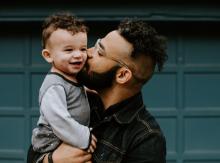
Suicides affect every family which has lost a loved one, in myriad ways that last a lifetime. Since the start of the pandemic, there has been a steady increase in the number of boys and men who end their own lives prematurely. With increasing public awareness of mental illness, it is a known fact that while women may experience more suicidal thinking (ideation) and make attempts on their own lives, men are far more likely to die by suicide, as high as five times the rate of women. Men use more lethal means such as guns, poisons, and hanging and may have easier access to these means. It is interesting to note that studies show that some men are also more likely to have used alcohol or engaged in substance use before taking their lives. Drinking can deepen depression and increase impulsive and risky behaviours; alcoholism is a known risk factor for suicide.
Mental illness in boys and men is a societal issue globally and across many cultures, as they seldom admit that they feel depressed or have a problem that is too overwhelming to manage on their own. Men find it difficult to ask for help or want to talk it out with others. In Trinidad and Tobago, persons have reported that male relatives have taken their lives due to financial issues and “being hounded by banks for repayment of loans,” the banks’ so-called customer-care disappearing in a crisis pandemic where there are frequent job losses and persons are unable to meet their loan obligations. Mothers have stated that their young boys talk of suicide, especially those who were not doing too well just before their examinations. One mother called the hotline at 9:20 p.m. one night, pleading for help as her 11-year-old son had told her that he wanted to kill himself and that he didn’t want to live any more. At 11 years old, what could be the societal pressures that made this young boy speak of death so early in a life not yet lived?
Thus, the recent Trinidad and Tobago Police Services’ (TTPS) statistics on suicidal deaths in this society that were collated by the Director of MindWise, Maria Divina O’Brien, support the research that mental illness among males is significantly high. The culture of silence prevails for men and boys who are encouraged to be “strong” and to not admit that they’re struggling to cope with challenges. From January – August 2021, we have lost 86 persons to suicide, 77 boys and men aged 9 - 60, and 9 women aged 26 - 60 years. The youngest boy to die by suicide was 9 years old and the youngest girl to attempt suicide was 11 years old. During this same period last year 2020, 80% of suicidal deaths were boys and men, this figure increasing to an alarming 89% for this group in 2021.
We must shift the cultural paradigm of silence and enforced isolation and make it easier for boys and men to talk about how they are feeling and to let them know that talking about feelings is not a sign of weakness but emotional resilience. Many may just need a listening ear, a friendly smile and reassuring words so that they can make it through another day. One 48-year-old repeat/frequent caller with a history of mental illness, who had made the rounds of all the counsellors on the phones, matter-of-factly said to me: “I know what my problem is, you know. I just need you to listen – no-one else seems to care.”
Risk factors for suicide are often related to family or work and the current economic downturn with increases in unemployment and financial loss. Social isolation and difficult social relationships add to these risks. It must be noted that while these risk factors are common to many persons, there are those boys and men who are more resilient and able to cope with the stressors of life in more successful ways. Coping strategies are key and many boys and men are able to manage when there are protective factors in place such as family support, community-based interventions through church groups, schools, NGOs and available tele-helplines.
Suicide is preventable. Fathers, brothers, grandfathers, teachers, church leaders and friends must model healthy self-care behaviours for our young boys and men. Speak openly about mental health challenges and provide solutions and positive affirmations. Be a pillar of support and a guiding light in someone’s darkness. My motto again: Each one must reach one!
 28/09/2022
 -
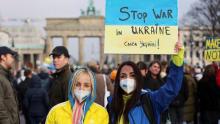
As an association, IAC abhors the frightening and destructive fighting taking place in Ukraine. The horrific violence has shocked counsellors -- of all nationalities and backgrounds -- across the world. We wish to show our solidarity with all others who are working to prevent an escalation of this human tragedy. Counsellors work with those impacted by the immense human trauma and suffering that takes place during and after such wars. Bereavement, human rights abuses, and the hundreds of thousands of people forced to flee their homes are just some of the problems being encountered. We are intensely aware of the impact of this crisis on the health, and mental health, of the people of Ukraine. Wherever possible, we will continue to support counsellors to deliver care and support to those affected by this crisis. We join in the United Nations call for sustained and safe access for the delivery of humanitarian assistance to Ukraine.
 28/02/2022
 -
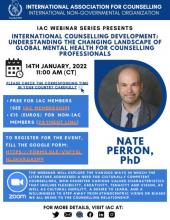
IAC Webinar Series -- Dr. Nate Perron -- Fri 14th January 2022Dear IAC Members and Friends,The upcoming webinar in the IAC Webinar Series takes place on Friday the 14th of January 2022 at 11:00am (USA Central Time). Dr. Nate Perron will deliver a presentation entitled "International Counselling Development: Understanding the changing landscape of global mental health for counselling professionals". Please find all details HERE -- including local times and how to register. This webinar is free for IAC Members, and costs €15 for non-members.This educational activity has been approved by the IAC Continuing Education/ Continuing Professional Development (CPD) committee. Participants who attend the full event qualify for one IAC Continuing Education (CE)/(CPD) unit hour. If you have any questions about this event please email Ms. Nisha Gupta (nishagupta.psych@gmail.com)We look forward to seeing you there.
 08/01/2022
 -
IAC Webinar Series -- Dr. Rick Balkin: Forgiveness -- Friday 1st Oct 2021
Dear IAC Members and Friends,We are pleased to announce that the upcoming webinar in the IAC webinar series will take place on Friday the 1st of October 2021 at 10:00am (USA Central Time). Dr. Rick Balkin will deliver a presentation entitled "Working Through Conflict and Forgiveness". Please find all Details HERE -- including links to registration and local times.This webinar is free for IAC Members, and costs €15 for non-members. Registration can be completed HERE.This educational activity has been approved by the IAC Continuing Education/ Continuing Professional Development (CPD) committee. Participants who attend the full event qualify for one IAC Continuing Education (CE)/(CPD) unit hour. If you have any questions about this event please email Ms. Nisha Gupta (nishagupta.psych@gmail.com)We look forward to seeing you there!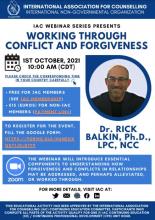 15/09/2021
 -
Welcome to the International Symposium On Trauma
ALL DETAILS AND REGISTRATION LINK HERE
Zoom Joining Link HERE: (Please register before Joining): https://taylors-edu-my.zoom.us/j/99488572962?pwd=OEVrYjNJMW1kcDczeFkyMmgvOGVmQT09
This 3-hour event is hosted by the International Association for Counselling, Taylor's University and the International Counseling Association of Malaysia (PERKAMA INTERNATIONAL). The details of the symposium are as follows:
Date: Friday the 6th August 2021
Times:
21:30 -- 12:30am (6--7th Aug) Kuala Lumpur (GMT+8) time.
06:30 -- 09:30am (6th Aug) Vancouver (PDT) time
09:30 -- 12:30pm (6th Aug) New York (EDT) time
14:30 -- 17:30pm (6th Aug) London (GMT+1) time
16:30 -- 19:30pm (6th Aug) Nairobi (EAT) timeThis event is FREE for members of the International Association for Counselling (IAC) and Perkama International members and for thsoe from countries with low-income economies. It costs €40 (euros) for non-members. To join IAC as a member please visit https://www.iac-irtac.org/?q=membership.
Our main speakers are Dr. Anasuya Jegathevi Jegathesan, Dr. Marla Buchanan, and Dr. Marvin Westwood with David Savill, Dr. Richard La Fleur, Dr Jürgen Müller-Hohagen and Dr. Grant Charles.
Continuing Education (CE) / Continuing Professional Development (CPD) Information: This educational activity has been approved by the International Association for Counselling (IAC) Continuing Education Committee. Participants who complete all parts of the activity qualify for three (3) IAC Continuing Education (CE) / Continuing Professional Development (CPD) Unit hours.We hope you enjoy the event!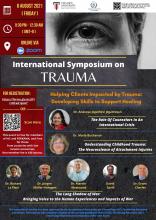 05/08/2021
 -
Recent events sparking increased awareness and attention to systemic racism-related trauma have inspired the International Association for Counselling (IAC) and American Mental Health Counselors Association (AMHCA) to collaborate on a complimentary four-hour webinar designed to equip counselors across the world with knowledge and tools for addressing systemic racism-related trauma. The webinar will consist of presentations by three international experts in the counseling profession followed by a reaction panel of four international counselors. All Details
 06/05/2021
- ‹ previous
- 4 of 8
- next ›